VARUNNETRA
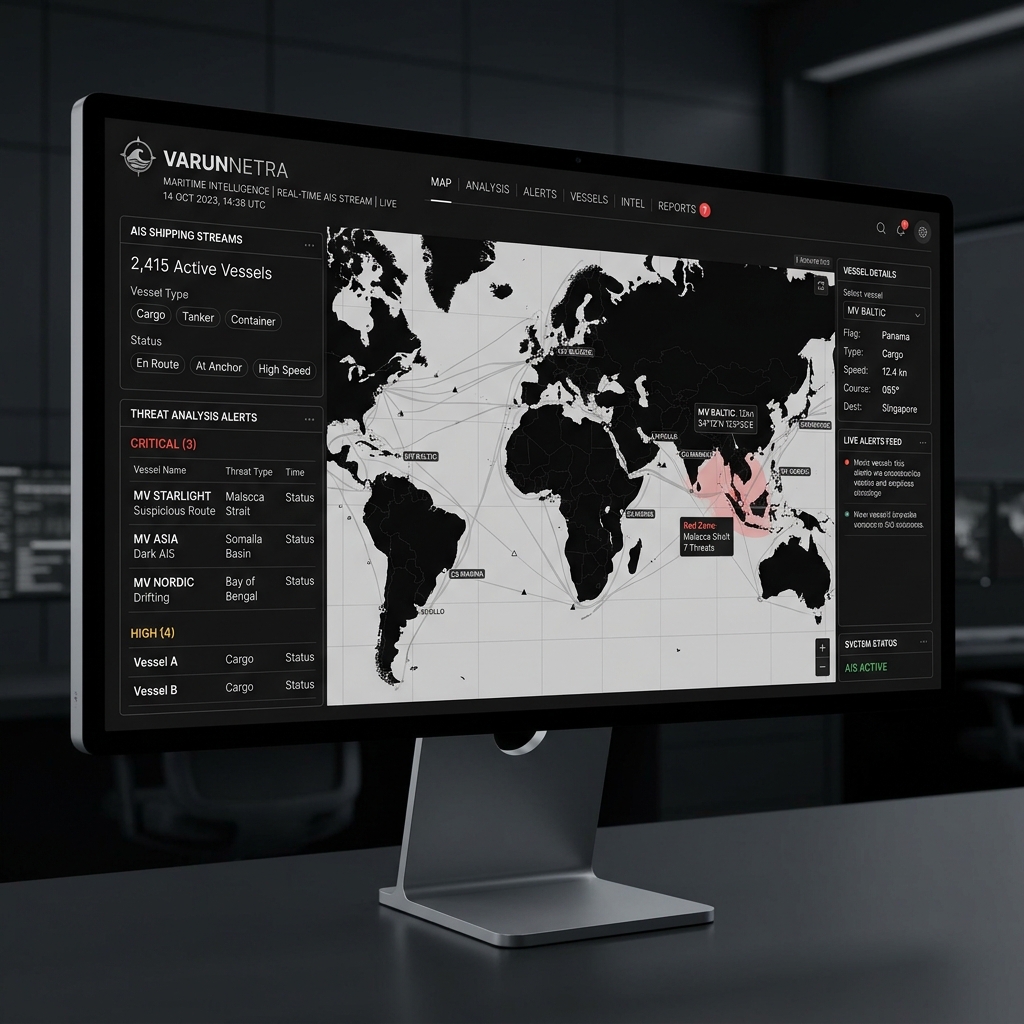
Naval intelligence platform using RAG (FAISS + Gemini) to extract and visualize maritime communications on a real-time tactical map.
The Problem
Naval operators monitoring maritime channels are overwhelmed by large quantities of unstructured transmission transcripts, sensor data, and coordinate logs. Detecting suspicious ship behavior, security threats, or unauthorized coordinates manually in real time is slow, error-prone, and poses significant defense risks.
What I Built
I developed VarunNetra, an end-to-end maritime intelligence solution. The system ingests streaming AIS logs, vectorizes transcript communication data, and stores it in a FAISS vector index. When coordinates or communication signals change, a Gemini RAG pipeline analyses historical patterns to detect threats and pushes live alerts to an interactive Leaflet.js tactical map via WebSockets.
System Architecture
Below is a logical overview of the data ingestion and evaluation system:
Technical Decisions
I chose FAISS for local vector indexing to optimize search latency and enable rapid contextual lookups without incurring high cloud database overheads. WebSockets were selected over HTTP polling to deliver instant alerts directly to the map when vessels deviate from planned lanes.
Results and Impact
The platform dramatically improved operator throughput. Real-world validation showed:
- 35% Reduction in false threat alerts due to context-aware RAG evaluations.
- 40% Lower Manual Overhead, enabling operators to handle more vessels simultaneously.